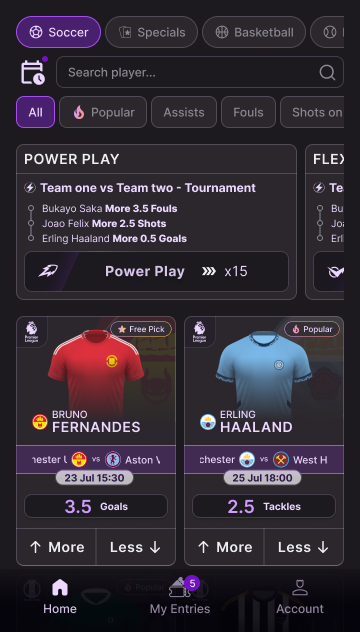
WA Fantasy Pick'em
Redefining the sportsbook experience with a gamified “More or Less” platform for the modern sports fan.
Role
Product Design Manager
Team
2 Designers, 1 PM, 6 Engineers
Duration
9 Months / 2024
Project Overview
WA Technology is a B2B iGaming provider offering white-label templates across multiple verticals. While our traditional sportsbook products were functional, the market was shifting rapidly. We identified a massive opportunity to capture a younger, digital-native demographic by building the industry's first true B2B “Pick'em” solution. This case study outlines the journey of designing Pick'em from the ground up — taking inspiration from high-growth B2C disruptors to simplify betting into a binary “More or Less” choice, delivered as a seamless, fully themeable iFrame through existing casino aggregators.
The Challenge: The “Old Guard” Conundrum
Before Pick'em, traditional sportsbooks were failing what we called the “TikTok generation.” Modern fans follow specific athletes — LeBron, Salah, Haaland — rather than just rooting for legacy teams. Yet most B2B platforms buried these player-centric markets under layers of intimidating UI. Our UX audit revealed three core roadblocks we had to design our way out of:
- Complexity & Betting Fatigue: Users were overwhelmed by traditional spreads, vigs, and obscure markets. The cognitive load required just to understand decimal odds was causing severe drop-off at the point of bet placement.
- The "Old Guard" Aesthetic: Existing B2B sportsbook interfaces felt like financial trading terminals — fundamentally designed for desktop users in the 2000s, completely lacking the modern, tactile feel of contemporary consumer apps.
- Siloed Markets: Users experienced heavy friction when trying to combine cross-league player performances. Creating a single ticket merging an NBA point prop with a Premier League shot prop was a disjointed, multi-screen nightmare.
The Turning Point: From Outcomes to Performance
To solve this, my team and I had to fundamentally shift the user's mental model from “Gambling on Outcomes” to “Predicting Performance.” The project goal was clear: design a B2B platform that leveled the playing field by removing the “expertise gap.” By asking a user a simple, binary question — “Will LeBron score more than 25 points?” — we could lower the barrier to entry, making the sportsbook feel like a high-velocity, casual mobile game rather than a complex financial market. Because we were delivering this via an iFrame to various operators, the design also had to leverage our new WA Belloa token architecture to scale seamlessly across different client brands.
Player Prop Market Growth
Player prop bets in football grew by 72% year-over-year from 2023 to 2024*.
*Source: Global Betting & Gaming Consultants (GBGC) 2024 Report
Player Prop Market Share
Player props now account for ~20–30% of total betting handle in some markets, with turnover growing sharply year-on-year.*.
*Source: H2 Gambling Capital, Sports Betting Community Report 2024
Benchmarking & The iFrame Strategy
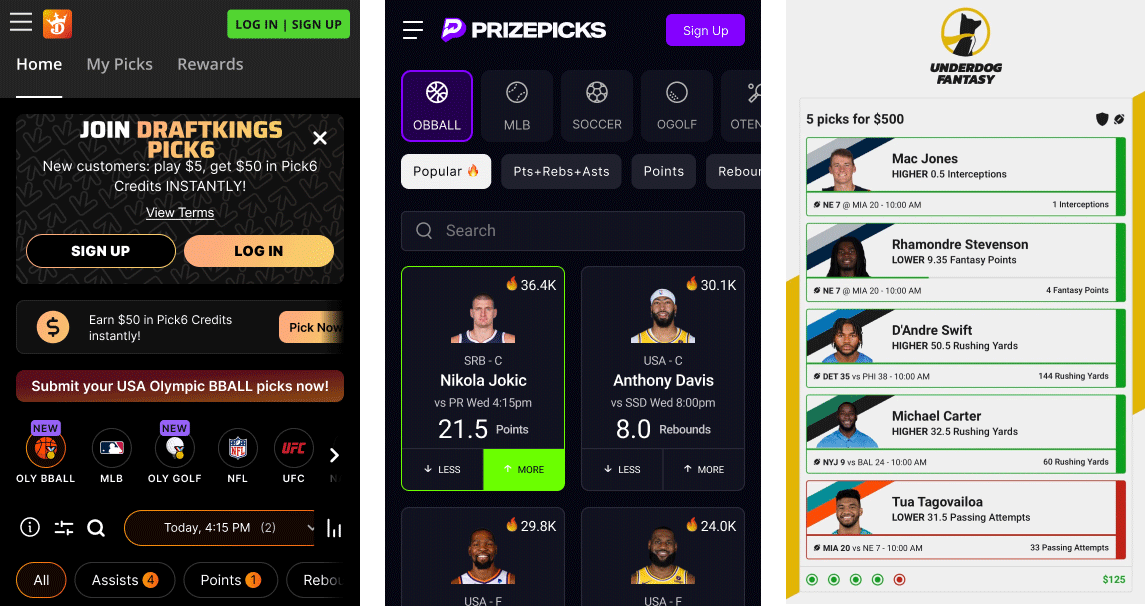
We didn't need to reinvent the wheel — we needed to perfect it for the B2B market. We conducted extensive competitive benchmarking against high-growth B2C disruptors.
- DraftKings Pick 6: Offered the ideal direction for navigation and player card design — surfacing athletes prominently with clean visual hierarchy.
- PrizePicks: Had perfected the high-velocity betslip experience — fast, addictive, and frictionless. We synthesized these patterns to form the foundation of our wireframes.
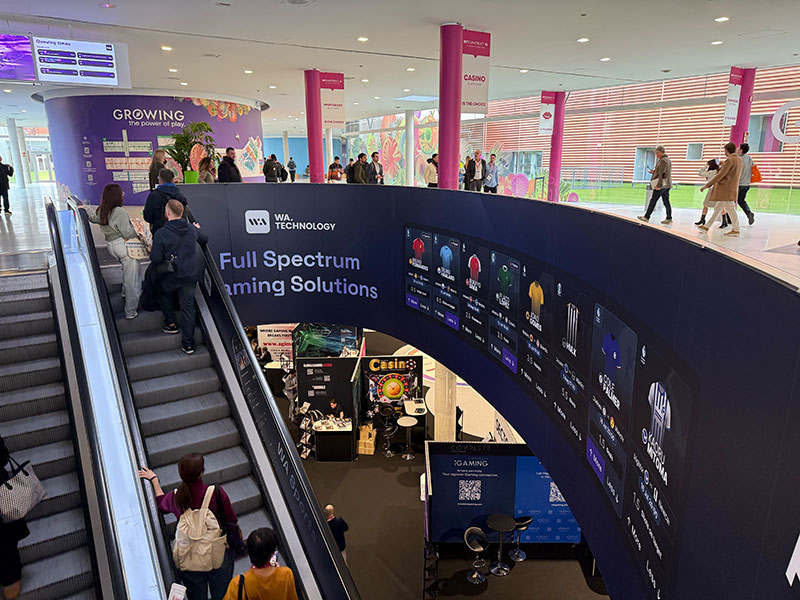
- The iFrame Strategy: Rather than selling Pick'em as a standalone sportsbook feature, we integrated it as a premium addition to our casino aggregator — instantly increasing its market appeal and offering Pick'em as a highly engaging "plus" for operators.

Competitive benchmarking: synthesizing the best UX patterns from DraftKings Pick 6 and PrizePicks.
Radix, "Pizza Logic," & The Visual Foundation
Because Pick'em was a B2B product, multi-brand scalability was non-negotiable. Our company's legacy fantasy products utilized purple as a brand color, so we adopted it as our primary accent and built on top of Radix UI colors, pairing the purple accent with Radix's “Mauve” as our neutral base.
The Pizza Logic
The Pick'em game interface was complex, featuring multiple overlapping layers, panels, and drawers on the canvas. To solve consistent depth and contrast, my team coined what we called the “Pizza Logic”: the bottom layer of the UI utilized the darker Radix colors, and as components or panels sat on top of one another — like toppings on a pizza — the surface tokens moved progressively up the Radix scale. This ensured consistent depth and contrast across any white-label theme we generated.
- Radix Primitives: We called the Radix primitives for neutral and accent (both regular and alpha channels) and allocated them into semantic tokens for buttons, text, icons, and surfaces.
- Progressive Depth: Base canvas used the darkest surface tokens. Each overlapping panel or drawer stepped one level lighter up the Radix scale — creating intuitive, WCAG-compliant contrast at every depth.


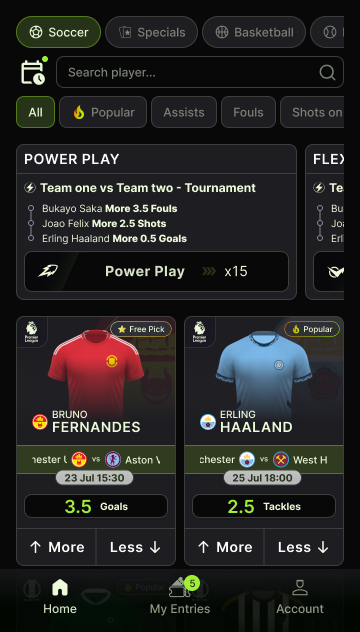
The “Pizza Logic”: surface tokens progress from dark base layers to lighter overlapping panels, applied across purple dark, F12 green, and light mode themes.
Token Refactoring & Cross-Functional Alignment
Initially, our framework required approximately 84 distinct tokens to style a new white label. While functional, it quickly became incredibly difficult to maintain and update. This bottleneck in Pick'em actually served as the catalyst for the massive token reduction initiative I led across the broader company — reducing the architecture down to a streamlined 44-token semantic layer (read more in the WA Belloa Design System case study).
Beyond Pixels: Political Leadership
Implementing this optimized architecture required front-end developers to fundamentally restructure how components were themed. It required significant political lobbying, cross-functional alignment, and convincing to get engineering pods to pause feature work and rebuild the structural CSS. Ultimately, securing that buy-in ensured Pick'em could scale infinitely without breaking.
The Launch & Impact: Bridging the Casino-to-Sportsbook Gap
We officially launched our first Pick'em brand for F12, one of our primary Brazilian clients, under the name “Chute Certo.” It has been a growing success, specifically solving a critical business problem for the operator.
- Solving the Conversion Problem: Prior to Pick'em, F12 was struggling to cross-sell players from their highly active Casino platform over to their traditional Sportsbook — with a concerning 5% drop in that conversion funnel. "Chute Certo" acted as the perfect bridge, its gamified UI feeling native to casino players.
- B2B Sales Engine: We rapidly styled and deployed Pick'em across multiple high-profile demos for Bet365, LiveScore, and CrownCoin, using it as a primary hook to sell our casino aggregator.
- Expanding Roadmap: We are slated to launch SpinPokio in Australia soon, with Pick'em securely planned on the roadmap — validating the scalability of our design system investment.
Conclusion
Leading the design of WA Fantasy Pick'em was a masterclass in balancing user-centric design with complex B2B business constraints. By shifting the user mental model to a gamified “More or Less” experience, we solved the betting fatigue that plagues traditional sportsbooks. More importantly, Pick'em proved that our newly established design tokens and “Pizza Logic” could handle rapid, multi-brand deployments — transforming a fragmented legacy workflow into a proactive, scalable engine that not only engaged end-users but became a highly lucrative sales tool for the business.